Laser and light treatments on darker skin: what to ask before you book
By Ingrid Tan, Senior Editor · Updated 2026-11-14
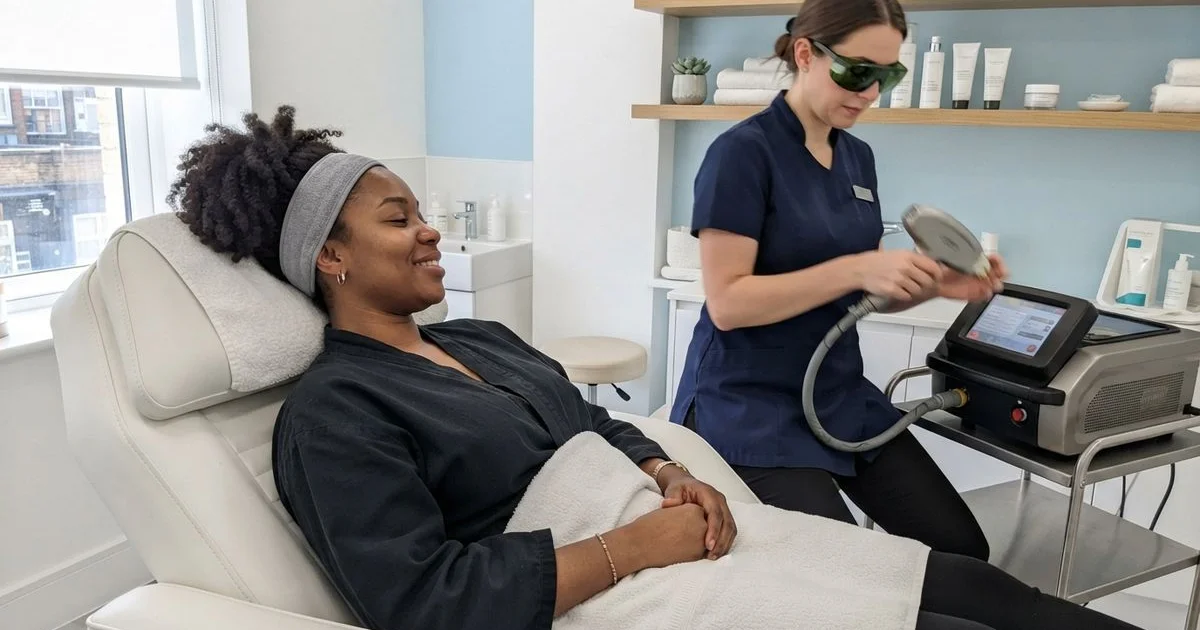
This is general information, not medical advice. A qualified practitioner should assess your skin before any laser or light treatment.
If you have darker skin, you may already have been told that some treatments are not suitable, or heard conflicting advice. The reason is practical. Laser and light devices work by targeting pigment, and skin that has more pigment can absorb energy in unintended ways. That is why the device, the settings and the practitioner’s experience matter so much.
Why skin tone matters
Lasers and intense pulsed light target colour. If the target is hair or ink, and the surrounding skin is also dark, the contrast is lower and there is more risk of unwanted effects such as burns or changes in skin colour. Some devices use wavelengths designed to be safer for deeper skin tones. Practitioners often use the Fitzpatrick scale to describe skin type, though it is a guide, not a full picture. IPL and different types of laser behave differently on the same skin.
Questions to ask
| Question | Why it matters |
|---|---|
| Which device will you use? | Not all are designed for deeper skin tones |
| How do you assess my skin type? | A structured assessment, not a glance |
| How many clients with my skin tone have you treated? | Experience matters |
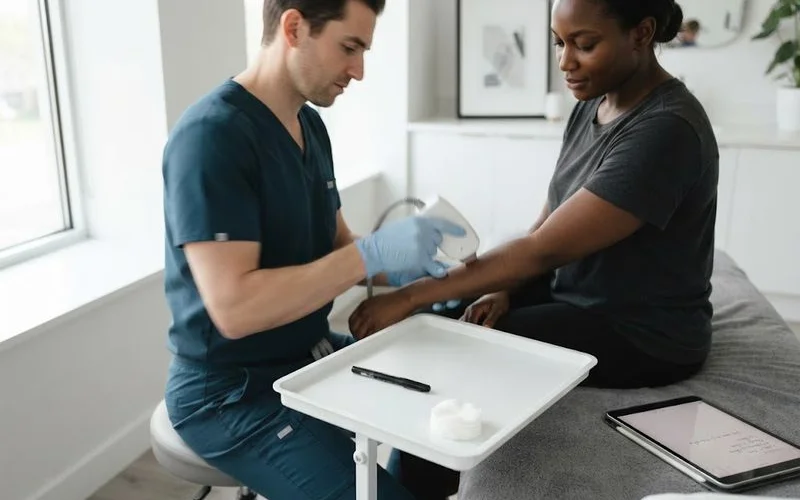
| Will you do a patch test, and how long do you wait? | Reactions can be delayed |
| What are the risks for my skin? | Including pigment change and scarring |
| What happens if my skin reacts? | A clear plan |
Warning signs
- A clinic that says every device suits every skin
- No patch test or no questions about your skin history
- A reluctance to explain the device
- Pressure to start a full course straight away
Be careful with sun and skincare
Recent sun exposure or tanning can affect how skin reacts, so tell the practitioner. Ask about skincare to avoid before and after. Daily sun protection is a common recommendation.
What if you have been turned down
Being told a treatment is not suitable can be frustrating, but it can be the responsible answer. Ask if an alternative device or approach exists, or whether another type of treatment would address your goal. If hair removal is the aim, what to expect from laser hair removal walks through the usual sequence.
Aftercare and monitoring
With darker skin, aftercare is where the risk of pigment change is most often managed. Follow the sun-protection advice exactly, avoid picking or scratching treated skin and use only the products the clinic recommends. If you notice darkening, lightening or blistering, contact the clinic soon, not weeks later.
Ask for a review after the first session to see how your skin responded before continuing. A cautious practitioner will start conservatively and adjust, and will not move to stronger settings until they have seen how you heal.
Keep your own record, including photos in natural light. If problems do develop, early documentation helps both you and the clinic work out what happened and what to do next. Do not be put off from asking questions because you worry about seeming difficult. They are exactly what a careful practitioner expects.
Look for openness
Reviewers on this site commonly describe appreciating practitioners who explain each step clearly and listen. This is their experience, and it applies here: the right practitioner will want to talk about your skin, not rush past it.
Browse providers in the laser hair removal and laser treatments category. For how we score listings, read the ranking method, or return to the home page.
FAQ
- Is laser treatment safe for darker skin?
- It can be with the right device, settings and experienced practitioner, but the risk of skin colour change is higher if the wrong approach is used. Ask about the clinic's experience.
- What is a Fitzpatrick type?
- A six-step scale describing how skin responds to sun, used to help choose settings.
- Do I still need a patch test?
- Yes. It is an important check, and a clinic that skips it deserves questions.
- What if a clinic says it treats all skin types?
- Ask which devices, how the skin type is assessed, and how many clients with your skin tone they have treated.