Laser tattoo removal: how many sessions and how long it takes
By Ingrid Tan, Senior Editor · Updated 2026-10-27
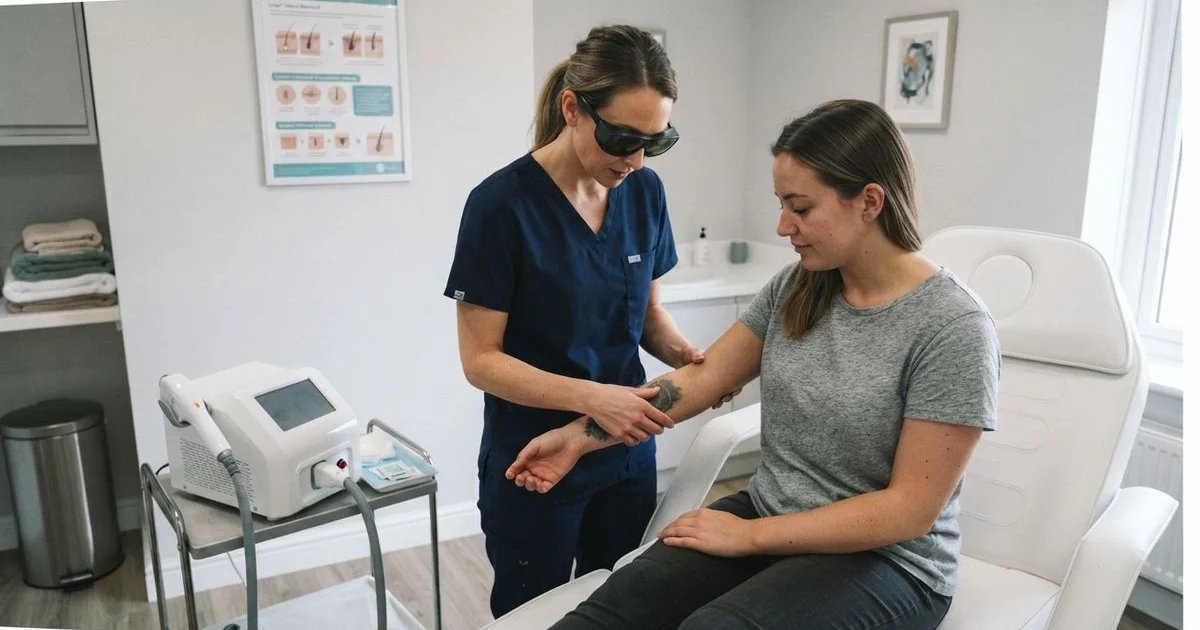
This is general information, not medical advice. A qualified practitioner should assess your skin and tattoo.
Laser tattoo removal is a slow process. If a clinic suggests it will be quick, ask what they are basing that on. This guide explains what affects the number of sessions and the length of the whole process.
What determines the number of sessions
| Factor | Why it matters |
|---|---|
| Tattoo size and density | More ink usually means more work |
| Colours | Some colours respond to lasers more readily than others |
| Depth and age | Ink placed deeper, or older ink, can behave differently |
| Your skin | Skin tone and healing rate affect which settings are safe |
| Location | Areas with more circulation may respond differently |
| Previous removal attempts | Scarring or past treatment may change the approach |
None of these is a prediction on its own. A practitioner assesses the tattoo and gives you an estimate, not a promise.
Session spacing
Treatments are typically spaced several weeks apart so skin can heal and the body can clear ink between visits. Rushing the gap raises the risk of skin damage, so be careful of any clinic that offers very frequent sessions. Over the whole course, that adds up to many months, and sometimes longer.
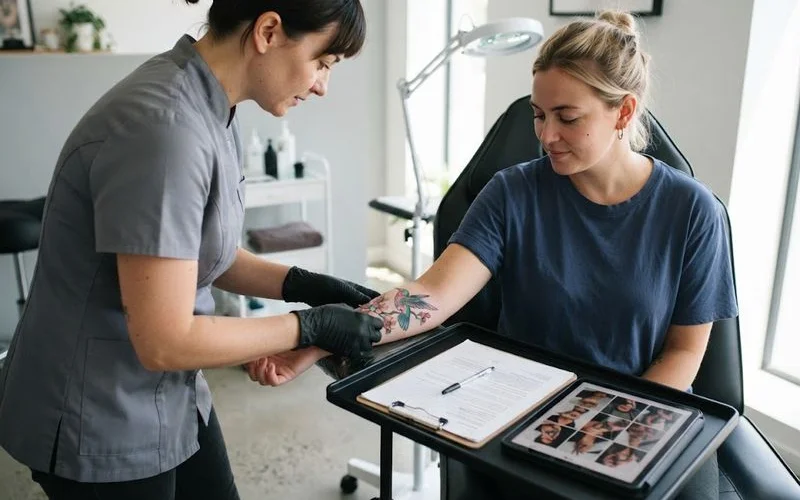
What the process looks like
- Consultation and assessment of the tattoo and your skin
- A test patch in some clinics
- Treatment sessions, with numbing or cooling if offered
- Aftercare between sessions, such as keeping the area clean and protected from the sun
- Review of progress after each session
Fading for a cover-up
Some people want a tattoo lightened so a new design can go over it. The question is how much fading the tattoo artist wants. Ask the artist first, then ask the removal clinic whether partial treatment is an option and what it would cost per session. Our directory lists clinics offering a service of this kind, but this guide is about planning, not about hiring.
Risks and aftercare
Blistering, scabbing, temporary skin colour changes and, less commonly, scarring are discussed in the literature as possible. Follow aftercare instructions closely and report anything unexpected. Skin tone changes the risk, which our guide to laser and light treatments for darker skin tones explains. Sun exposure on a treated area is a common concern, so ask what protection is advised.
Costs and commitment
Because the process takes many months, think about the commitment and not just the single-session price. Ask whether the clinic quotes per session or for a course, what happens if you need more sessions than estimated, and whether you can stop partway without penalty.
Also consider the practical side: visits are spread over a long period, so choose a clinic you can reach reliably. A convenient location matters when you are committing to repeat appointments.
If the tattoo has personal meaning, or you are removing it for a reason that is hard to talk about, tell the practitioner only as much as you wish. A good clinic keeps the conversation practical and respectful. And if you are unsure whether to remove or cover, give yourself time. Removal is a long process, so it should be a considered decision.
Choosing a clinic
Ask who operates the laser and how they are trained, what the cost is for the full course, what happens if skin reacts, and whether a patch test is done. Reviewers tend to appreciate practitioners who explain each step, which is their experience and a sensible thing to look for. See the tattoo removal category, our ranking method, or the home page.
FAQ
- How many sessions will I need?
- It depends on the size, colours, depth, age of the tattoo and your skin. Expect the clinic to give an estimate and to say it cannot be guaranteed.
- Why are sessions spaced weeks apart?
- Skin needs time to heal and the body to clear ink between treatments. The gap is set by the practitioner.
- Is complete removal guaranteed?
- No. Some tattoos fade a lot and others leave a shadow or marks. A careful clinic will say so.
- Can I fade a tattoo before a cover-up?
- Often yes, but speak to both the removal clinic and the tattoo artist about how much fading is helpful.